Formula 1’s 2026 season was meant to be a clean slate. New chassis, new power units, the most sweeping regulation rewrite in more than a decade. Instead it has quietly become a season about geography. Two April rounds vanished, a Grand Prix that belongs to one country is being staged thousands of miles away in another, and the circuits – more than the rulebook – are doing the work of separating the field.
This is a guide to all 23 race weekends: the calendar as it stands in September 2026, what each track actually asks of a car, and which quirks tend to decide who is standing on the top step on Sunday.
My read, after going through the circuit data alongside the new technical regulations: the 2026 cars get the headlines, but the calendar is where this season is actually being decided. A car that looks untouchable down Monza’s straights can be merely average through Zandvoort’s banked final corner, and the new, energy-limited power units make that contrast sharper rather than softer.
The calendar has already rewritten itself twice
The 2026 schedule was announced with 24 rounds. By March it had 22. Bahrain and Saudi Arabia, due to run on 10–12 and 17–19 April, were pulled amid the conflict in the Middle East, and the FIA and Formula 1 later confirmed neither April round would simply be abandoned. No replacement was found in April, so the season opened with a five-week gap between Japan at the end of March and Miami in May. That is the kind of hole a hardcoded schedule never recovers from: it changes the shape of the whole year, not just two weekends.
Then, in July, the calendar moved again. Bahrain’s round was reinstated in name but not in place. Sepang International Circuit in Malaysia was confirmed as the host on 2–4 October, as the “Gulf Air Bahrain Grand Prix in Malaysia”, slotting between Azerbaijan and Singapore. The result is a 23-race season in which one of its rounds travels nearly 4,000 miles from the country that gives it its name. Sepang last held a Grand Prix in 2017, so it returns as a rare known quantity that most of the current grid has never raced on.
Stefano Domenicali, F1’s chief executive, framed it as the sport showing it can “adapt, find solutions, and deliver”. Fair – though the more honest version is that a war forced F1 to improvise, and it improvised well.
(Also unresolved: continued speculation over whether the closing rounds in Qatar and Abu Dhabi will take place as scheduled. Treat the last two weekends of the year as provisional until they happen.)
What the 2026 rules changed, and why every circuit feels it
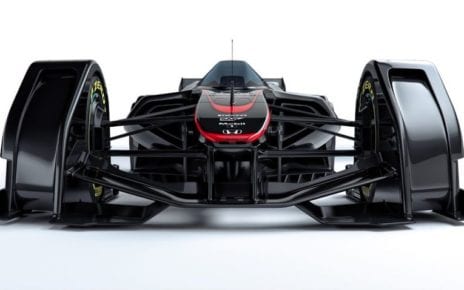
The cars are the biggest technical story of the year. Under the FIA’s 2026 technical regulations – built around what the governing body calls the “Nimble Car Concept” – the minimum weight dropped by 30kg to 768kg, the wheelbase shrank by 200mm, the floor narrowed by 150mm, and the tyres got slimmer. Downforce is expected to fall by roughly 30% and drag by about 55%.
The bigger shift is in how the cars make and spend energy. DRS is gone, replaced by active front and rear wings that switch between a high-downforce “corner mode” and a low-drag “straight mode” on every lap, for every driver. The MGU-K’s output nearly tripled from 120kW to 350kW, giving the power unit a near 50/50 split between combustion and electrical power, while a new “Overtake Mode” grants an extra 0.5MJ when a driver is within a second of the car ahead.
Why does that matter circuit by circuit? Because energy management is now a lap-by-lap puzzle that changes with the layout. A long, heavy-braking track like Monza or Baku rewards harvesting as much as raw pace. A short, low-speed track like Monaco gives you almost nowhere to recover the energy you deploy. Teams were openly nervous before the season that cars could run out of battery on the longest straights – a concern that would have been unthinkable in the DRS era, when the wing did the overtaking and the engine was simply a fuel hose.
This is where I part company with the pre-season hype. The narrative was that the new rules would guarantee closer racing. I don’t buy that as a guarantee. What the rules have actually done is hand an advantage to whichever team reads a circuit’s energy profile best, which is a different order of skill – and it is why these venues matter as much as the pecking order.
Every 2026 race weekend at a glance
The table below is the full calendar as it stands now. Notice how the six sprint weekends cluster in the first half of the year, and how the run-in becomes a punishing stack of long-haul flyaways.
| Round | Grand Prix | Circuit | Date | Sprint | Length (km) |
|---|---|---|---|---|---|
| 1 | Australia | Albert Park, Melbourne | 6–8 Mar | No | 5.278 |
| 2 | China | Shanghai International | 13–15 Mar | Yes | 5.451 |
| 3 | Japan | Suzuka | 27–29 Mar | No | 5.807 |
| 4 | Miami | Miami International Autodrome | 1–3 May | Yes | 5.412 |
| 5 | Canada | Circuit Gilles-Villeneuve | 22–24 May | Yes | 4.361 |
| 6 | Monaco | Circuit de Monaco | 5–7 Jun | No | 3.337 |
| 7 | Spain | Barcelona-Catalunya | 12–14 Jun | No | 4.657 |
| 8 | Austria | Red Bull Ring, Spielberg | 26–28 Jun | No | 4.318 |
| 9 | Great Britain | Silverstone | 3–5 Jul | Yes | 5.891 |
| 10 | Belgium | Spa-Francorchamps | 17–19 Jul | No | 7.004 |
| 11 | Hungary | Hungaroring | 24–26 Jul | No | 4.381 |
| 12 | Netherlands | Zandvoort | 21–23 Aug | Yes | 4.259 |
| 13 | Italy | Monza | 4–6 Sep | No | 5.793 |
| 14 | Spain | Madring, Madrid | 11–13 Sep | No | 5.474 |
| 15 | Azerbaijan | Baku City Circuit | 24–26 Sep | No | 6.003 |
| 16 | Bahrain | Sepang, Malaysia | 2–4 Oct | No | 5.543 |
| 17 | Singapore | Marina Bay | 9–11 Oct | Yes | 4.927 |
| 18 | United States | Circuit of the Americas | 23–25 Oct | No | 5.513 |
| 19 | Mexico | Hermanos Rodríguez | 30 Oct–1 Nov | No | 4.304 |
| 20 | Brazil | Interlagos | 6–8 Nov | No | 4.309 |
| 21 | Las Vegas | Las Vegas Strip | 19–21 Nov | No | 6.201 |
| 22 | Qatar | Lusail International | 27–29 Nov | No | 5.419 |
| 23 | Abu Dhabi | Yas Marina | 4–6 Dec | No | 5.281 |
Circuit lengths and round order are public record as of September 2026. The official dates are worth checking against Formula 1’s own 2026 calendar before booking anything, given how often this season has already moved.
The street circuits: precision, then attrition
Four rounds run on closed public roads – Monaco, Baku, Singapore and Las Vegas – and they could hardly be less alike. The thing they share is consequence: get it wrong by a hand’s width and the wall decides your weekend.
Monaco is the extreme case. At 3.337km it is the shortest circuit on the calendar and the slowest, with average speeds around 160km/h. The barriers sit close enough on both sides that overtaking is effectively impossible, which means qualifying is the race. This is the annual argument, and my position is the unpopular one: I would keep Monaco forever. Not because the race is thrilling – it usually isn’t – but because one flat-out qualifying lap through Casino Square is a test of nerve that no permanent circuit replicates, and F1 is in the business of showcasing that.
Baku is the mirror image. Its main straight runs for over 2km and produces some of the highest top speeds of the year, only to funnel into a medieval castle section so tight the cars look like they are threading a needle. It is also, by reputation, the fastest pure street circuit on the calendar, and safety cars and red flags are rarely far away.
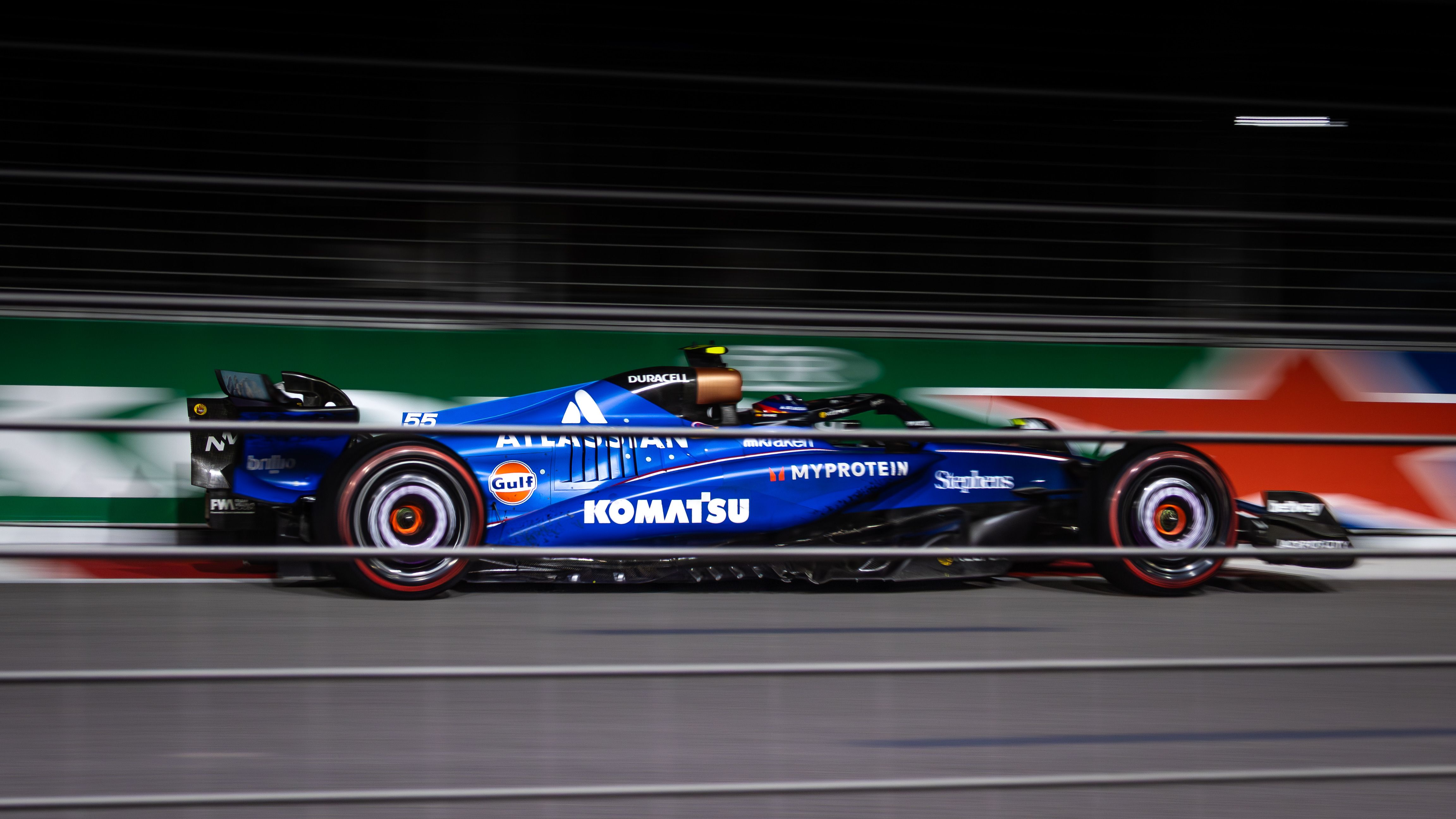
Singapore and Las Vegas both run after dark, and both are physical ordeals in different ways. Singapore’s 19-turn Marina Bay layout is relentlessly hot and humid – drivers can lose up to 3kg in a race – and it is widely regarded as the most punishing event on the schedule. Las Vegas is longer at 6.201km, a flat-out blast down the Strip framed by the kind of scenery no other round can offer.
Speed temples that punish different things
Monza is the fastest circuit of the year and carries the nickname “Temple of Speed” for good reason: just 11 corners, cars at full throttle for roughly 80% of the lap, and the lowest downforce setup anyone will run. Braking into the first chicane from well over 300km/h is where races are won and lost.
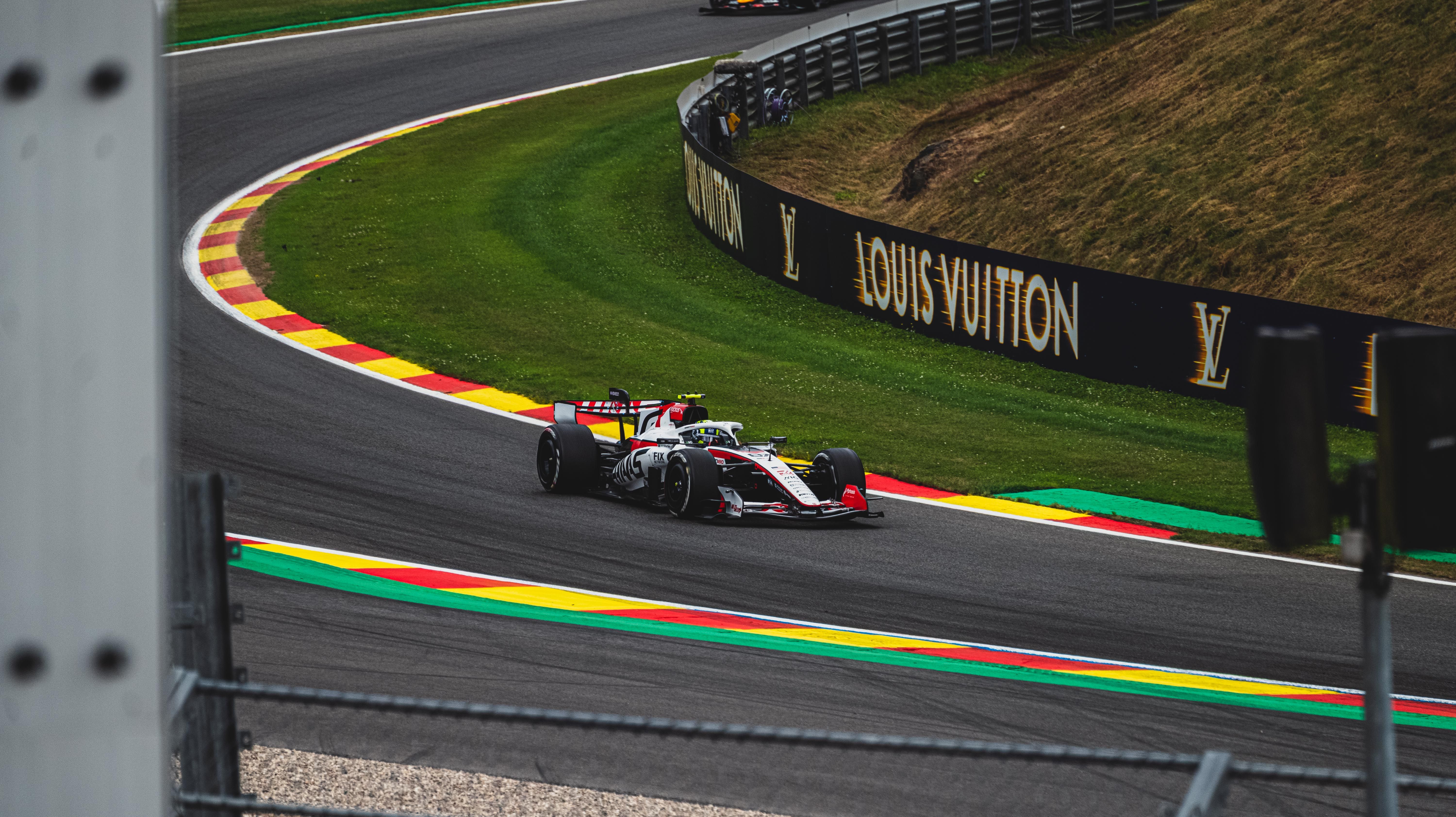
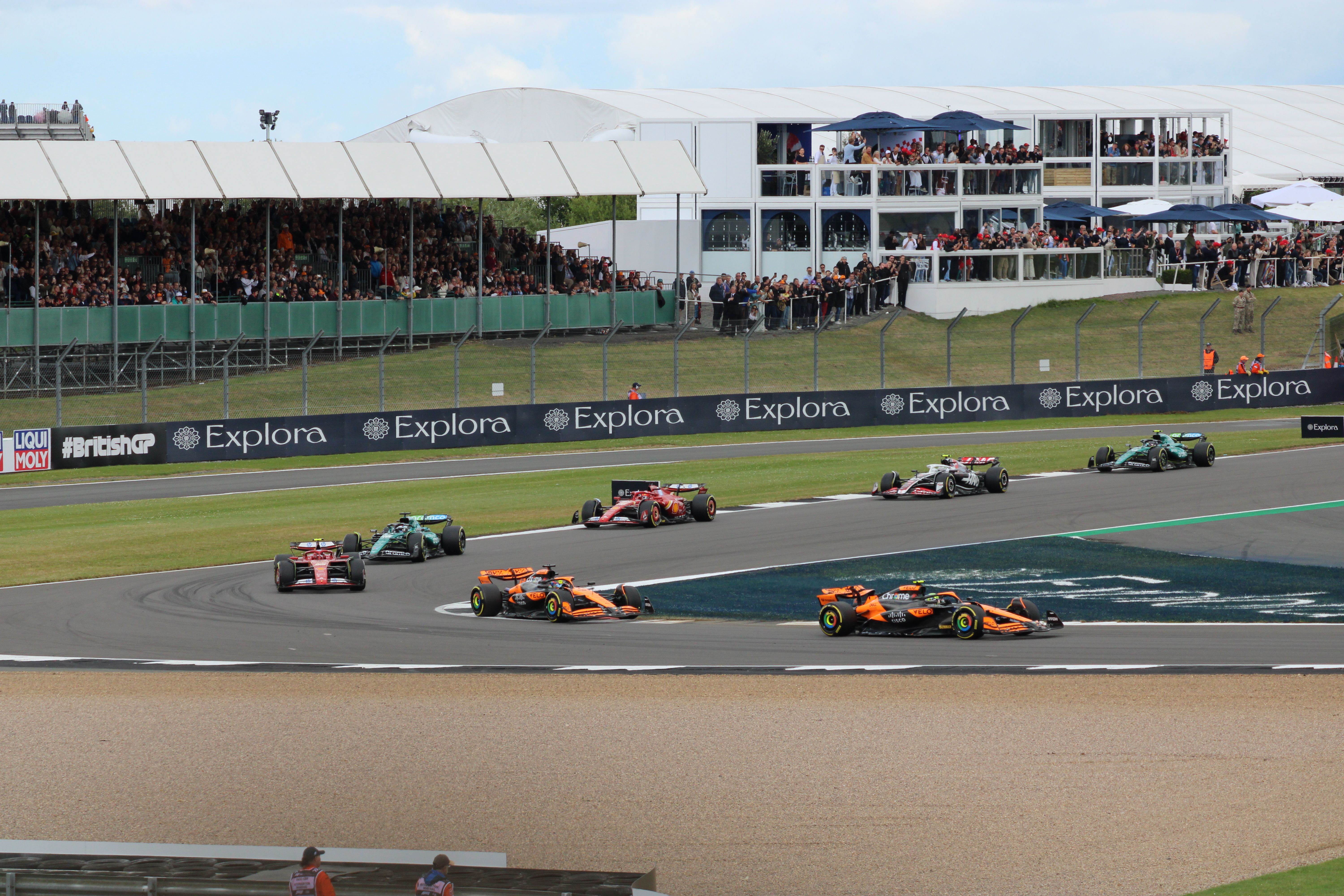
Spa-Francorchamps is the longest lap at 7.004km, winding through the Ardennes with more than 100 metres of elevation change. The Eau Rouge–Raidillon climb is taken flat and blind, and the mountain weather can turn it into a water slide without warning, which is exactly why it produces so many upsets. Silverstone, a former RAF airfield, rewards a different strength: the Maggotts–Becketts–Chapel sequence, a rapid direction change that exposes any aerodynamic weakness in the blink of an eye. Suzuka then goes one further with a figure-eight layout and the flat-out 130R, arguably the bravest corner left in the sport.
Thin air, banking and a very narrow valley
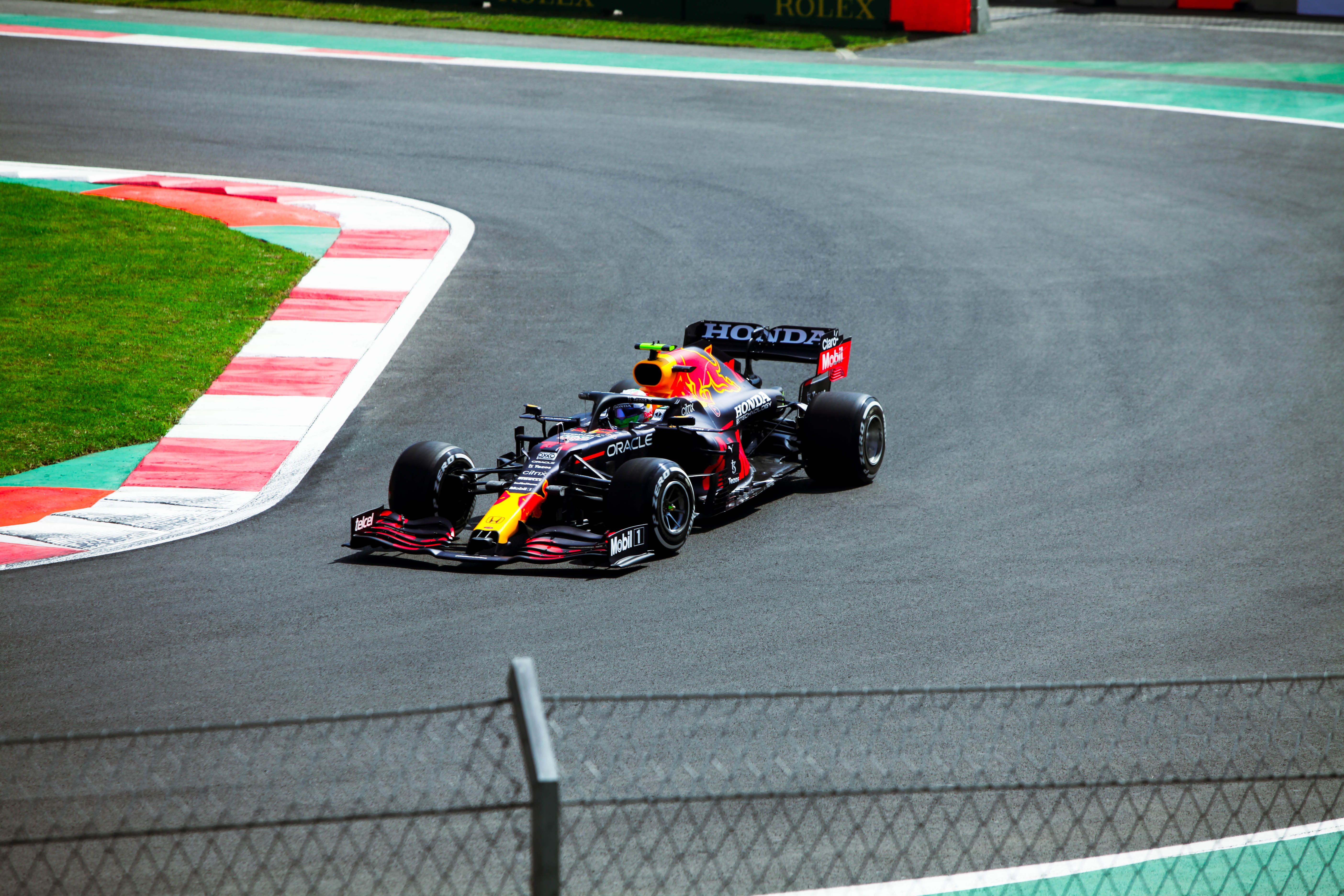
Mexico City is the outlier of the year. At 2,240 metres above sea level the air is thin enough that engines lose power and teams chase – roughly 20% less downforce – meaning they run maximum downforce just to recover what the altitude takes away. Slipstreaming down the main straight becomes a weapon, and the packed stadium section is one of the great vistas in motorsport.
Zandvoort has the one feature no other circuit can match: a banked final corner, the Arie Luyendijkbocht, angled enough that it feels like a wall of asphalt. Interlagos sits in a natural bowl, runs anti-clockwise and has produced more late-race drama than almost anywhere. The Red Bull Ring compresses everything into nine corners and a steep climb, while the Hungaroring is so tight and twisty it has been called “Monaco without walls”. Further east, Shanghai’s layout is famously shaped like the Chinese character 上, and the Circuit of the Americas opens with a blind uphill run into a wide Turn 1 built precisely for overtaking.
Madrid’s Madring is the only genuinely new stop
The Spanish Grand Prix moves to a brand-new venue, the Madring, in September. It is a hybrid layout: around 1.5km of public roads near the IFEMA exhibition centre stitched to purpose-built sections. The main straight invites speeds of roughly 340km/h, but the middle of the lap tightens into a chicane-laced corridor that will string the field out nose-to-tail. New circuits almost always need a few years and one resurfacing before they race well – COTA and Zandvoort both improved markedly – so I would temper expectations for year one, whatever the spectacle looks like on paper.
Qatar and Abu Dhabi close it under lights
Lusail was built for MotoGP, and it shows: fast, flowing, medium-to-high-speed corners with precious few genuine overtaking spots. Abu Dhabi’s Yas Marina has been the venue for the finale every year since 2014, and the 2021 revisions removed the slow chicanes that used to strangle it, turning the final sector into something that can still change a championship on the last lap. It is a fitting close to the longest season in the sport’s history.
Sprint weekends change the arithmetic
Six rounds use the sprint format in 2026: China, Miami, Canada, Great Britain, Zandvoort and Singapore. Instead of three practice sessions, the weekend compresses into one practice, a sprint qualifying, a short sprint race that sets part of the grid, then the main qualifying and Grand Prix. The effect is subtle but real – teams get a single hour to dial a car into a circuit they may not have visited in a year, and a mistake on Friday can leave a front-runner starting the sprint from the wrong half of the grid. At a place like Silverstone, where setup for the high-speed sweeps is everything, that single session is a genuine handicap.
How to keep up without watching every session
Across 23 rounds in five continents, no sane person watches every lap. The practical approach is to follow the championship picture between races rather than inside them – because the mini-table after each round tells you more about the season than any single result. Keeping an eye on Formula 1 live results as the flyaways unfold is the easiest way to see how much the venue is shaping the standings.
Frequently asked questions
How many races are in the 2026 F1 season?
The 2026 season now has 23 rounds. It was announced with 24, cut to 22 after Bahrain and Saudi Arabia were cancelled in March, then returned to 23 when Sepang in Malaysia was added in July to host the rescheduled Bahrain Grand Prix.
Which is the longest circuit on the 2026 F1 calendar?
Spa-Francorchamps in Belgium, at 7.004km. It is also the track with the greatest elevation change, over 100 metres across the lap.
Which is the shortest and slowest F1 circuit?
Monaco, at 3.337km. Its average lap speed of roughly 160km/h makes it the slowest stop of the year, and overtaking on track is almost impossible.
Why is the Bahrain Grand Prix being held in Malaysia in 2026?
The original April race in Bahrain was cancelled because of the conflict in the Middle East. Bahrain retained the event and, with F1 and the FIA, arranged for Sepang International Circuit to stage it on 2–4 October under the name “Gulf Air Bahrain Grand Prix in Malaysia”.
What is different about the 2026 F1 cars?
They are smaller and lighter, with the minimum weight down 30kg to 768kg and a 200mm shorter wheelbase. DRS has been replaced by active front and rear wings, and the hybrid system is now close to a 50/50 split between combustion and electrical power, with the MGU-K rising from 120kW to 350kW.
Which circuits host sprint weekends in 2026?
Six rounds: China, Miami, Canada, Great Britain, Zandvoort and Singapore.
Which circuit is highest above sea level?
Mexico City’s Autódromo Hermanos Rodríguez, at more than 2,200 metres – high enough that power, downforce and cooling all have to be managed differently to every other round.
How this guide was put together
I built the calendar table from the round order published after the July Sepang announcement and cross-checked it against Formula 1’s own 2026 schedule page, both as of September 2026. The technical figures come from the FIA’s 2026 regulations summary and the sport’s own aerodynamics explainer; circuit characteristics such as length, corner count, altitude and track type are drawn from circuit specifications and reporting on the 2026 venues. Two details remain genuinely unsettled and are flagged in the text: whether the Qatar and Abu Dhabi rounds proceed, and how the new Madring will actually race. If you are planning travel, recheck dates a week before, because this calendar has already changed twice.